
Have you ever wondered how our community spaces might be designed for a future everyone wants to see? How civic infrastructure can truly serve all of us? And how wellbeing and connection can be strengthened through collective imagining of the spaces we share?
For the past three years, Birmingham Settlement has been involved in a participatory project with the University of Bristol’s ESRC Centre for Sociodigital Futures (CenSoF), working alongside local people to co-design futures that reflect community hopes and priorities.
Working with three community anchor organisations and building on community engagement at our Neighbourhood Futures Festival, researchers have been exploring what matters most to people in terms of connection – and especially with those whose voices are too often missing from these conversations.

What does this mean in practice?
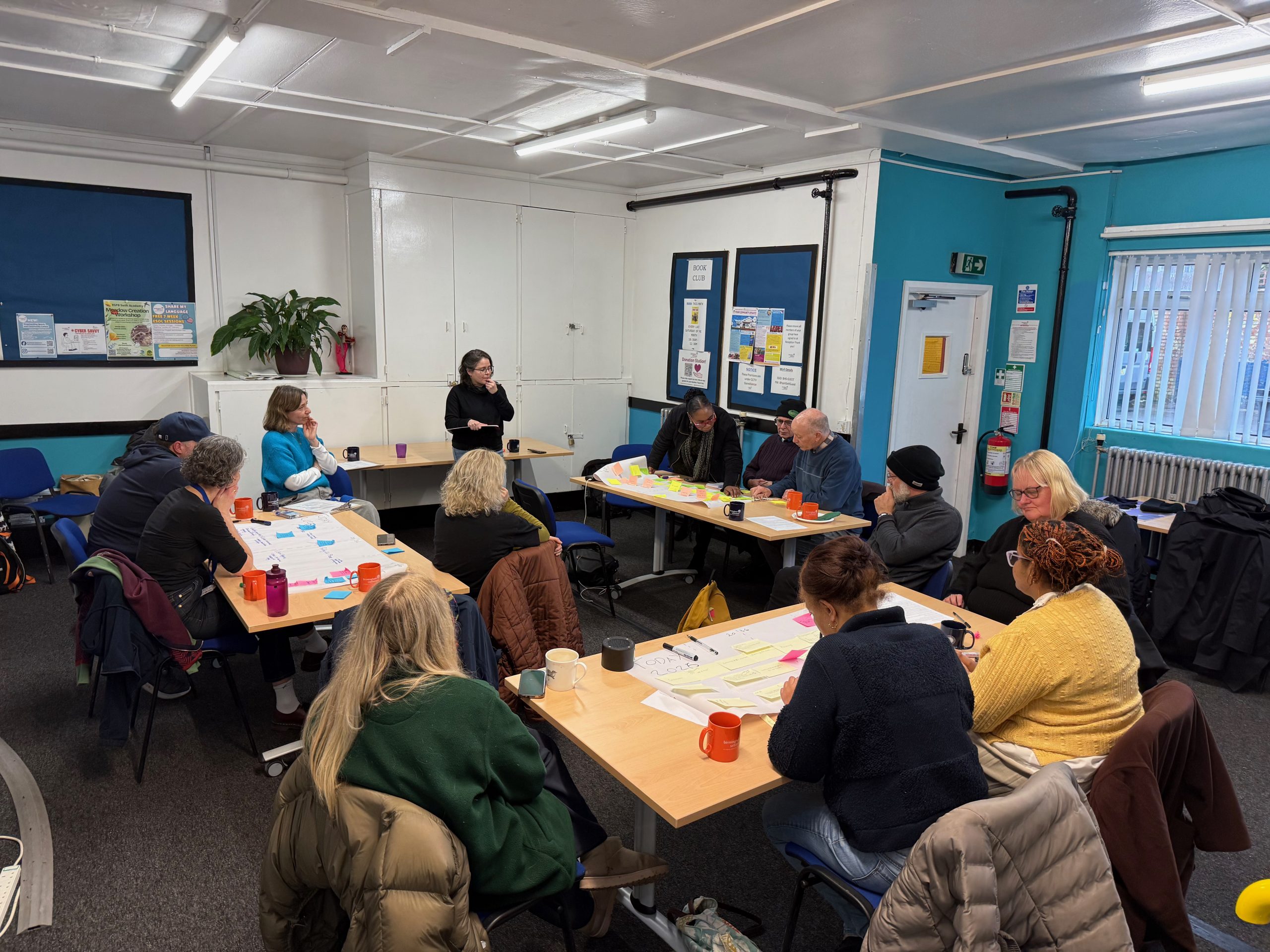
In early 2025, the Birmingham Settlement Futures Group was formed, bringing together community members, Settlement staff and volunteers, and other local voices from Kingstanding and Ladywood. Together, they took part in a series of participatory workshops guided by CenSoF researchers.
Participants were invited to dream, imagine and explore future possibilities for Birmingham Settlement using creative approaches such as art, music, storytelling and interactive activities.
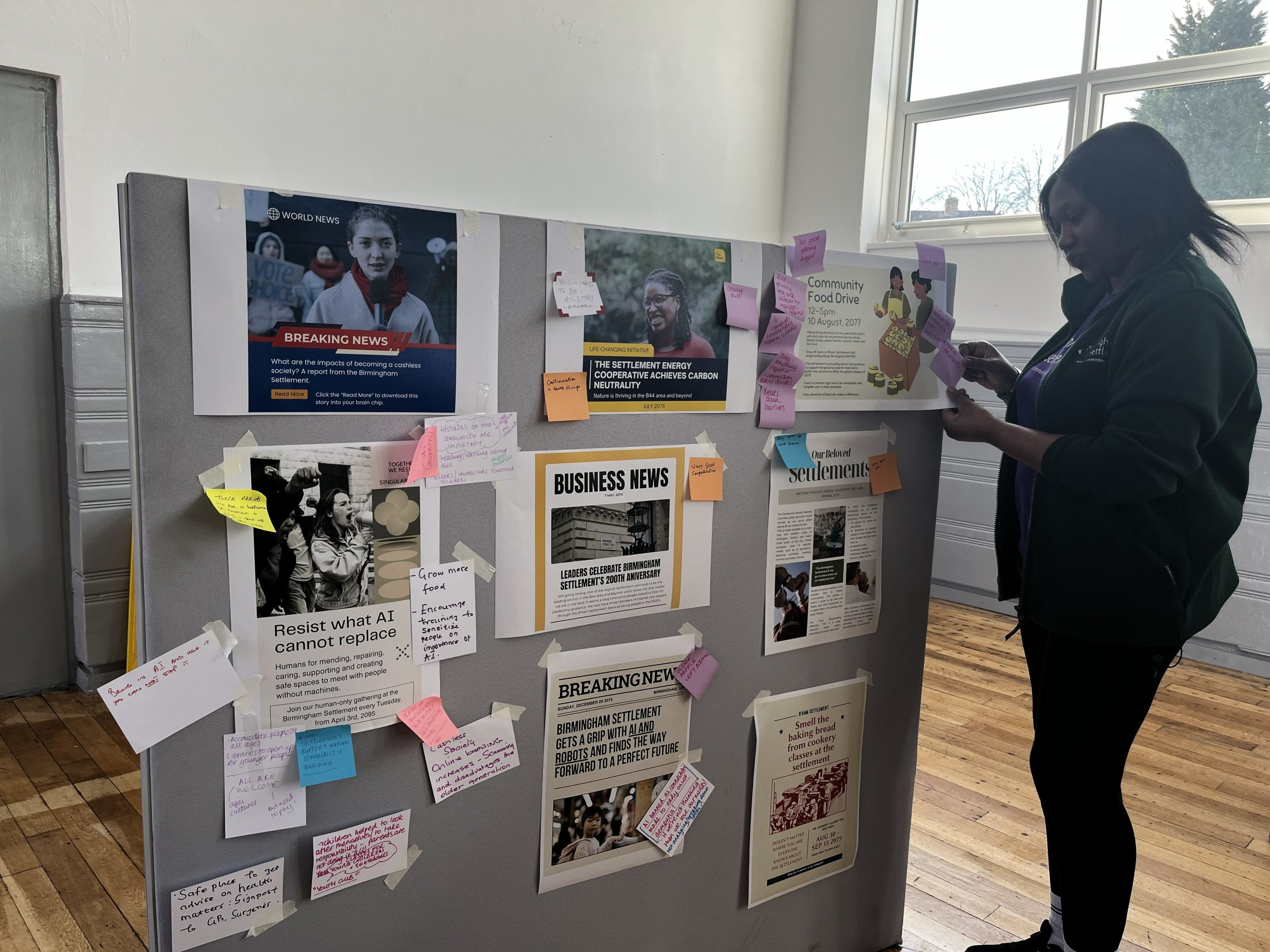
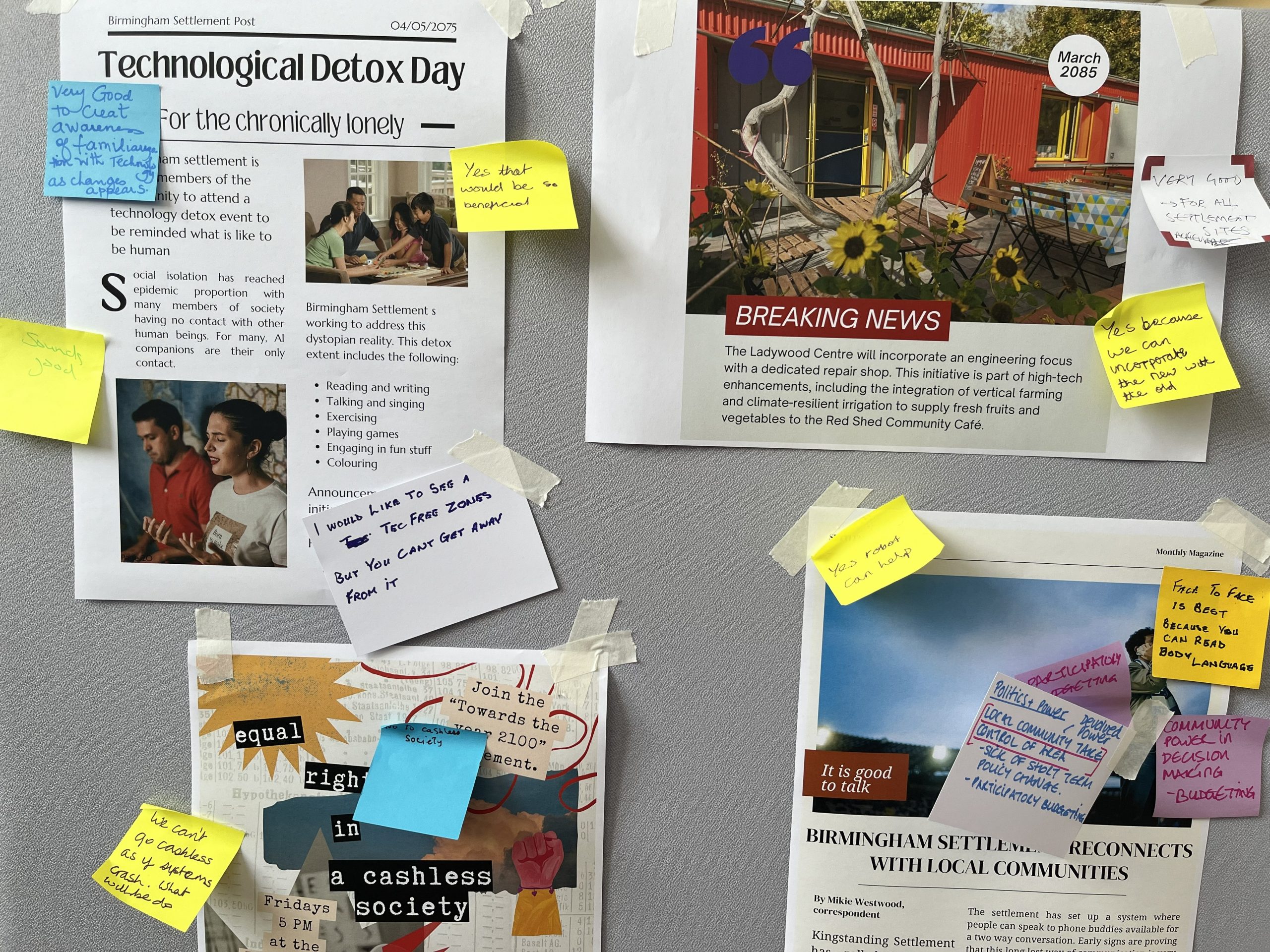
Instead of relying on abstract, technical language or formal consultation processes, engagement was rooted in people’s own ideas about the futures they want, explored in ways that felt meaningful, creative and inclusive. Researchers created space for open conversation, shared imagination and practical expression, drawing on people’s lived experience, hopes for their families and knowledge of the neighbourhood.
In a series of sessions, participants designed posters and wrote newspaper front pages from the future, imagining the role the Settlement might play in years to come. These were later shared through an exhibition, opening up their ideas to a wider audience.
In another session, a mobile phone app guided participants outdoors on a ‘walk into the future’, prompting them to write about the vision they wanted to see for Birmingham Settlement and Kingstanding.
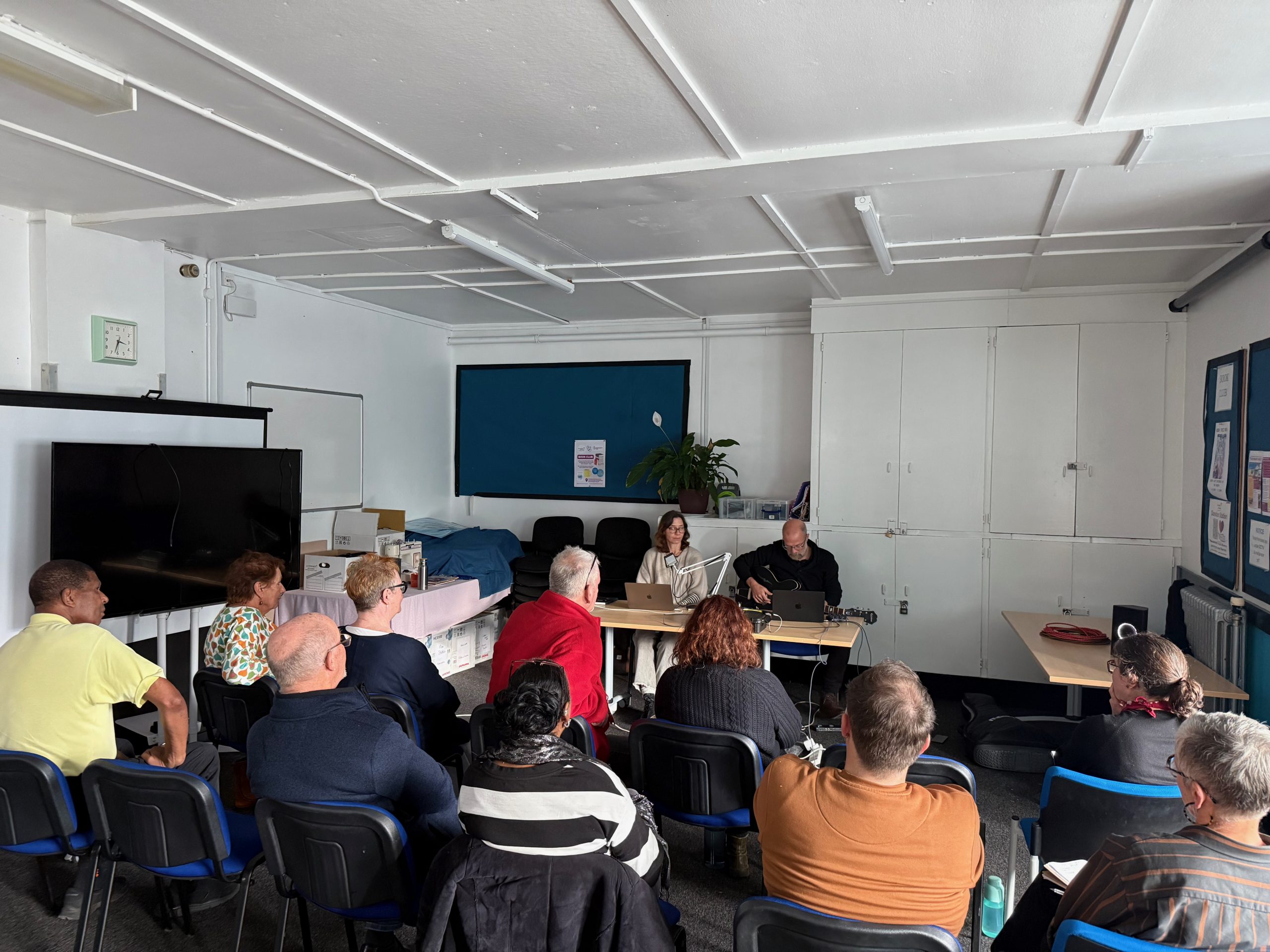
The group then returned to the Sports and Community Centre where a performer and a musician improvised an immersive, futuristic soundscape inspired by what participants had written. Their words were woven together with ambient sounds and music, giving voice to the futures that participants imagined.
You can listen to the finished composition on SoundCloud here.
Making Augmented Reality a reality
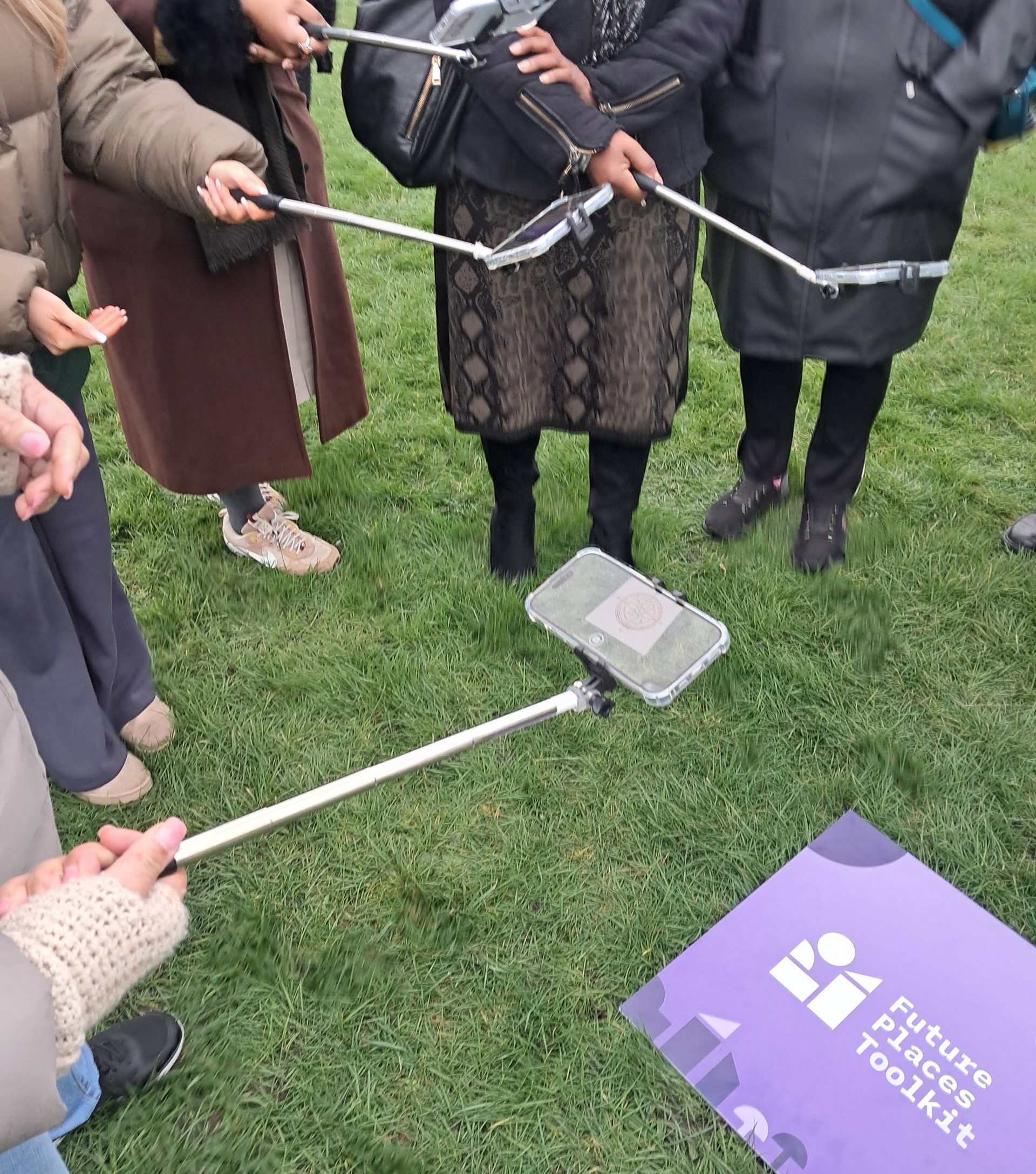
The group also experienced the Future Places Toolkit, an immersive approach to community planning using Augmented Reality (AR), a method that helps people to share their own visions about life in the years ahead.
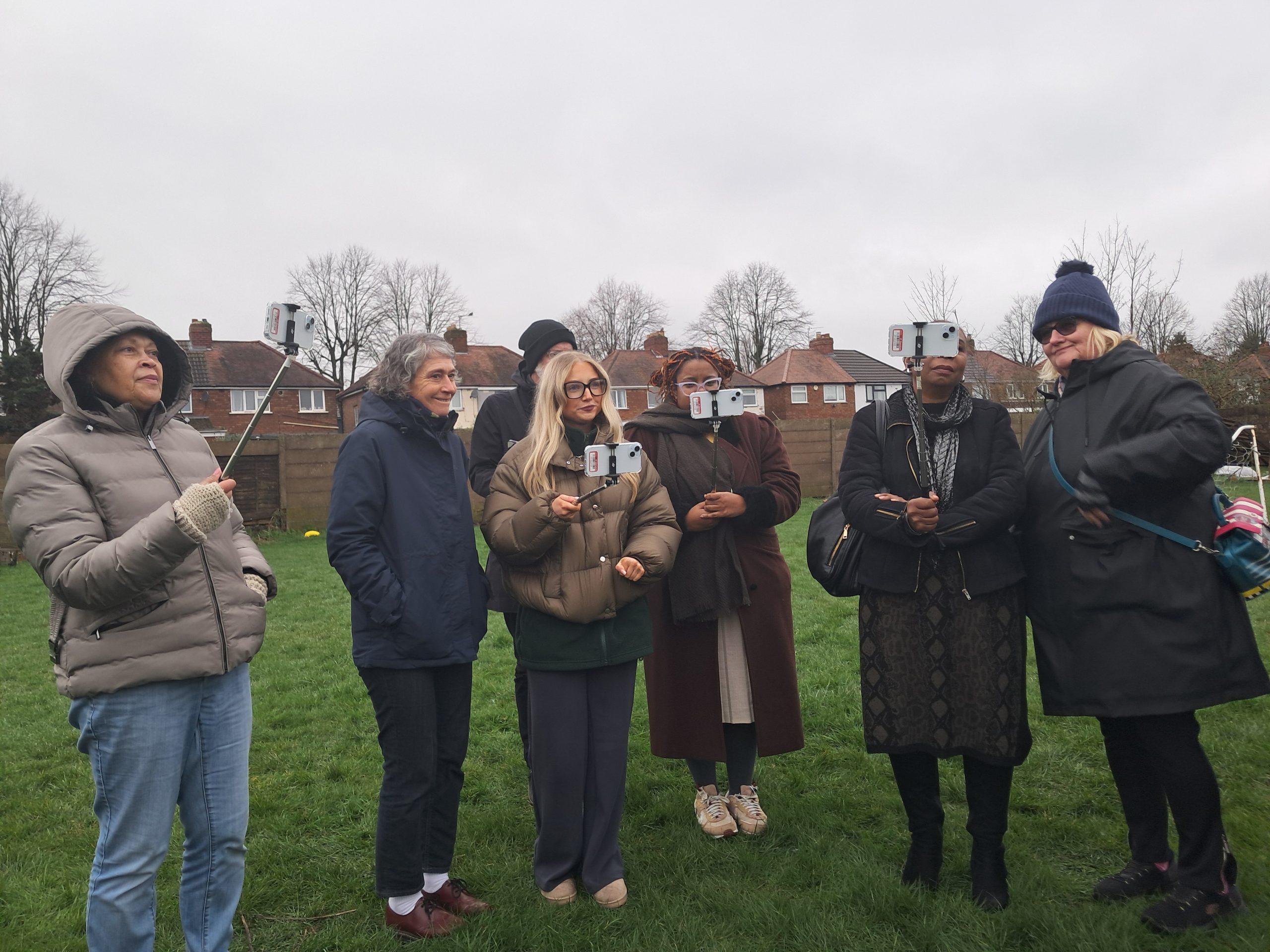
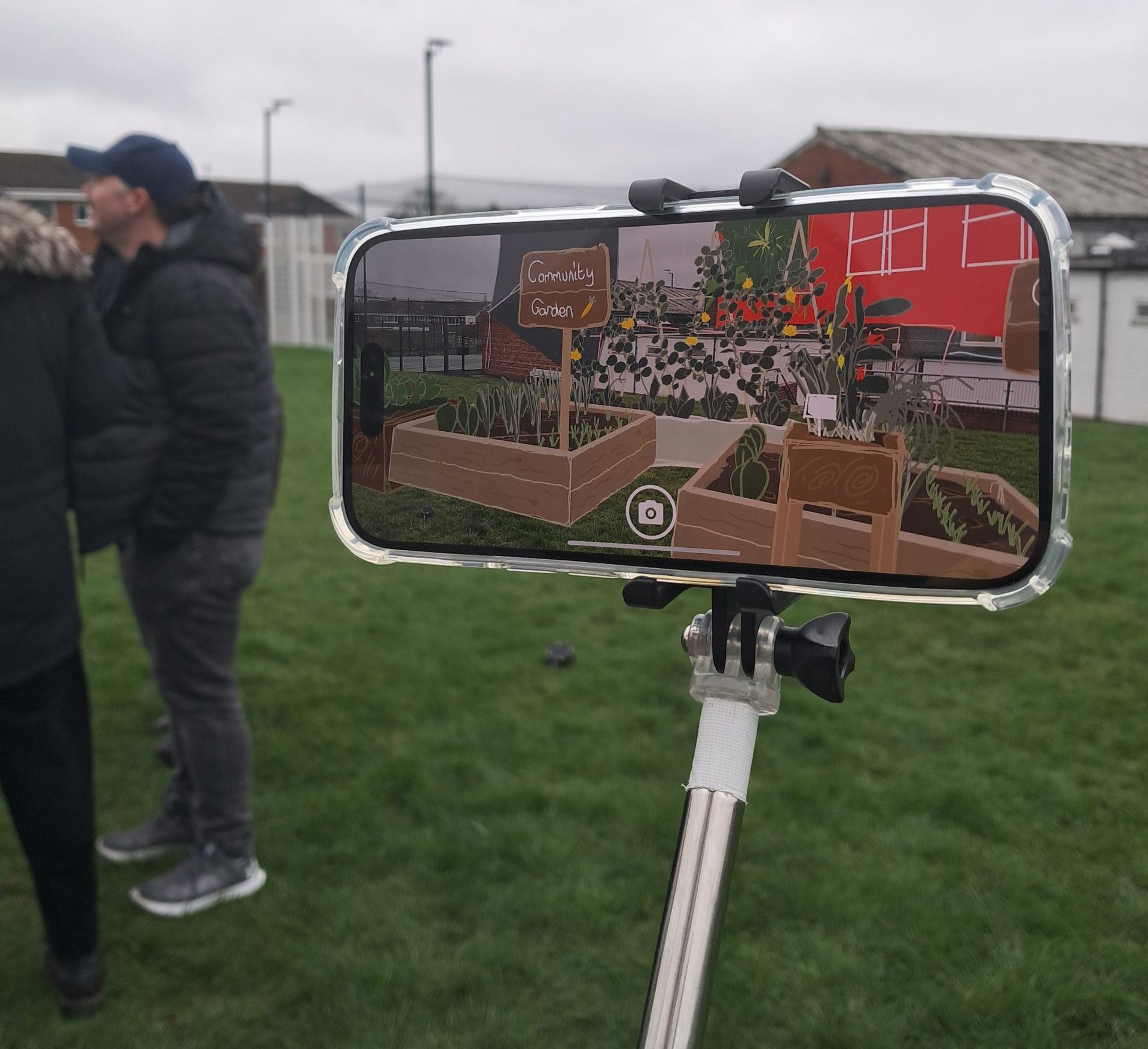
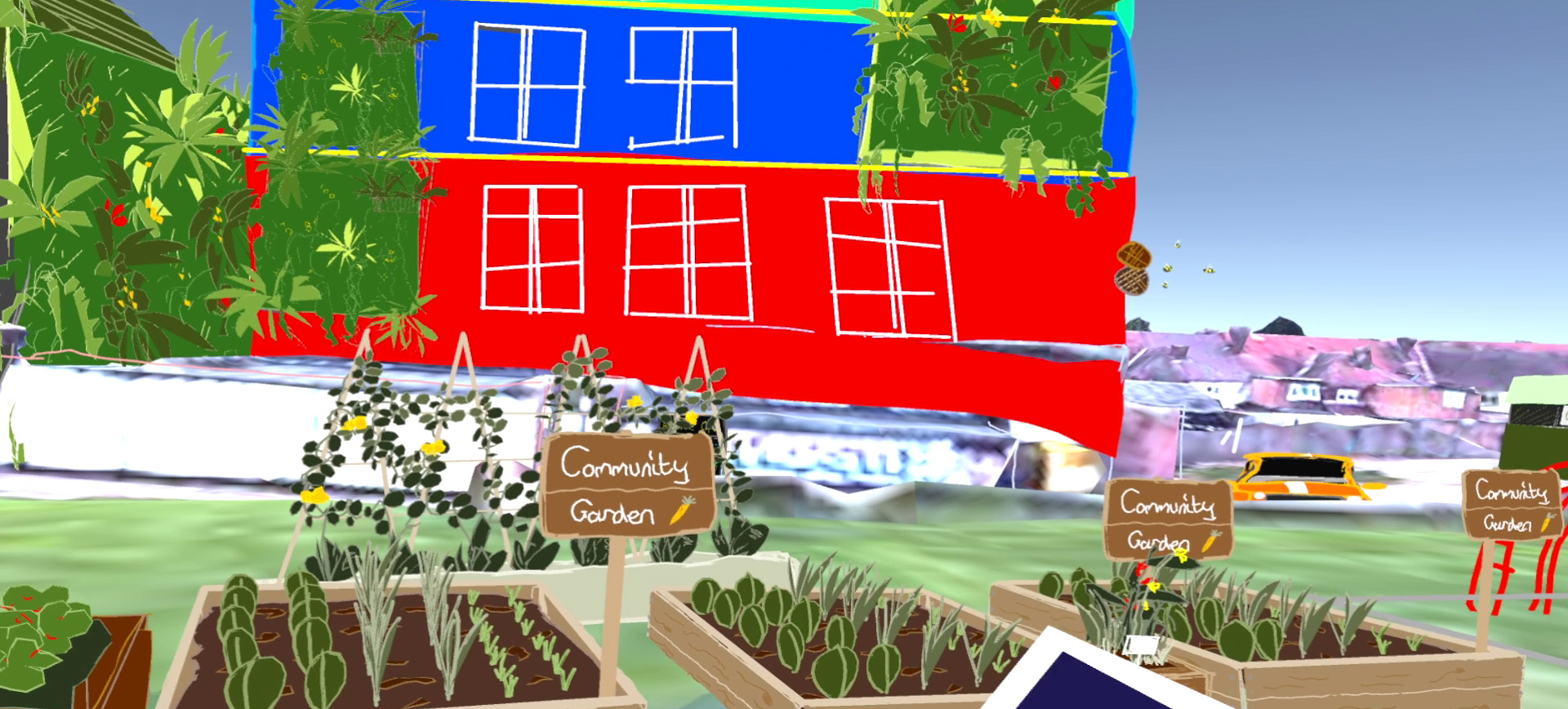
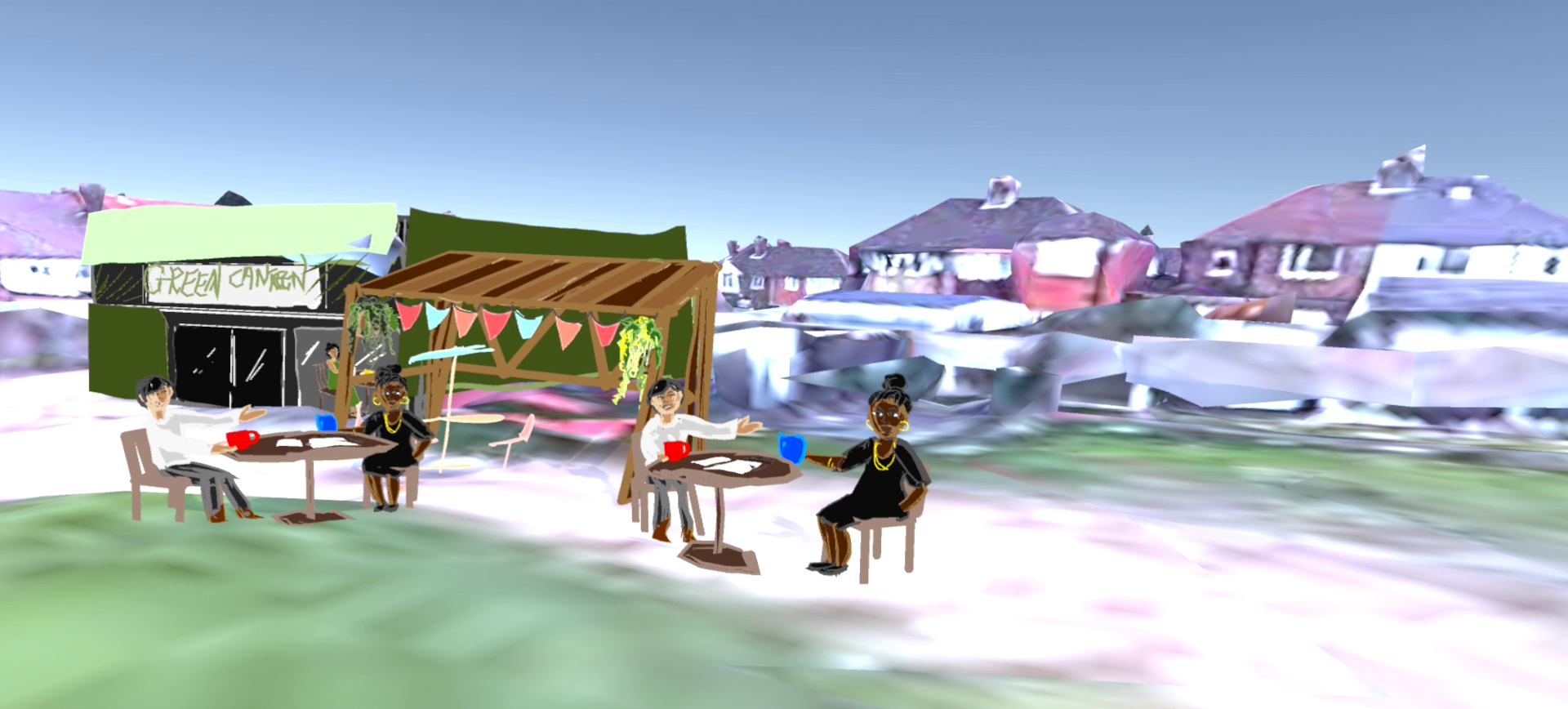
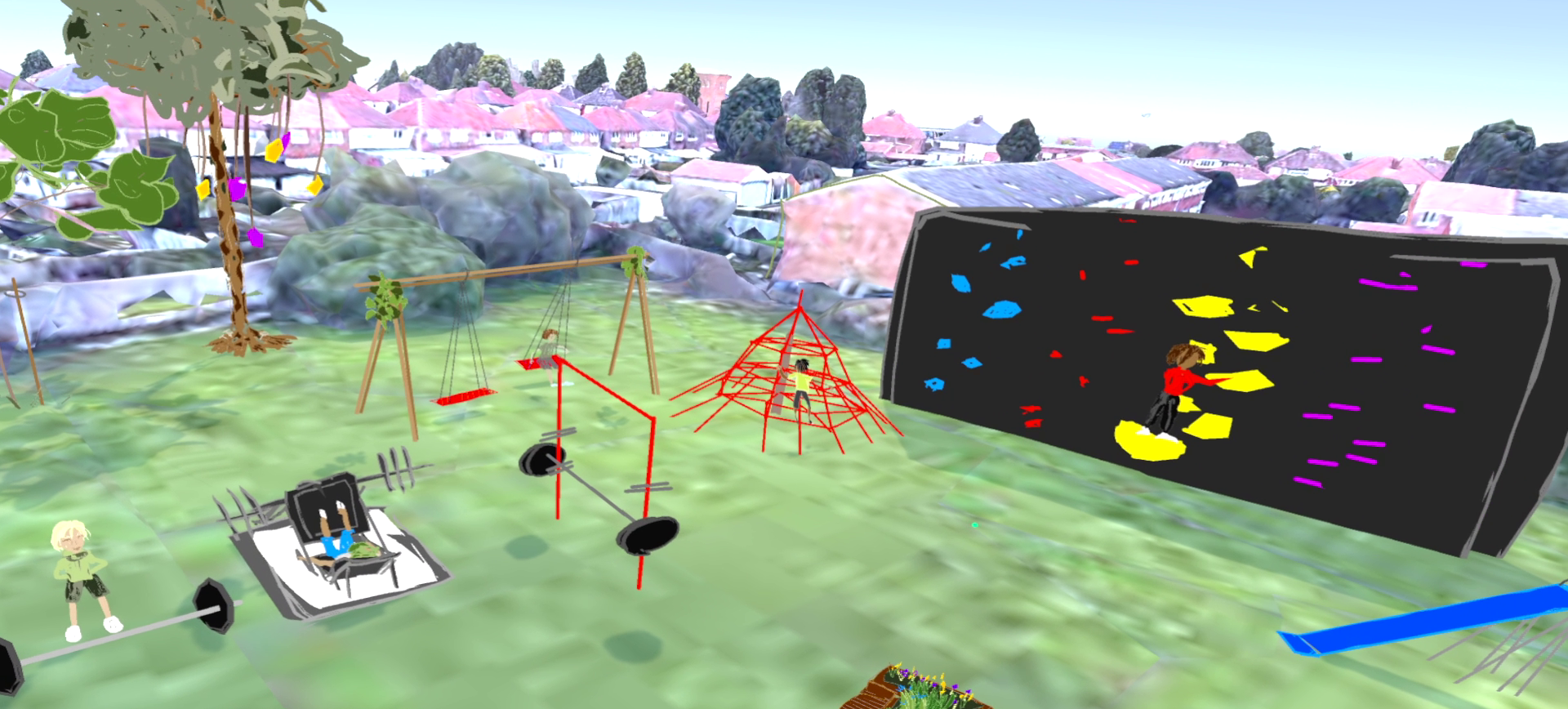
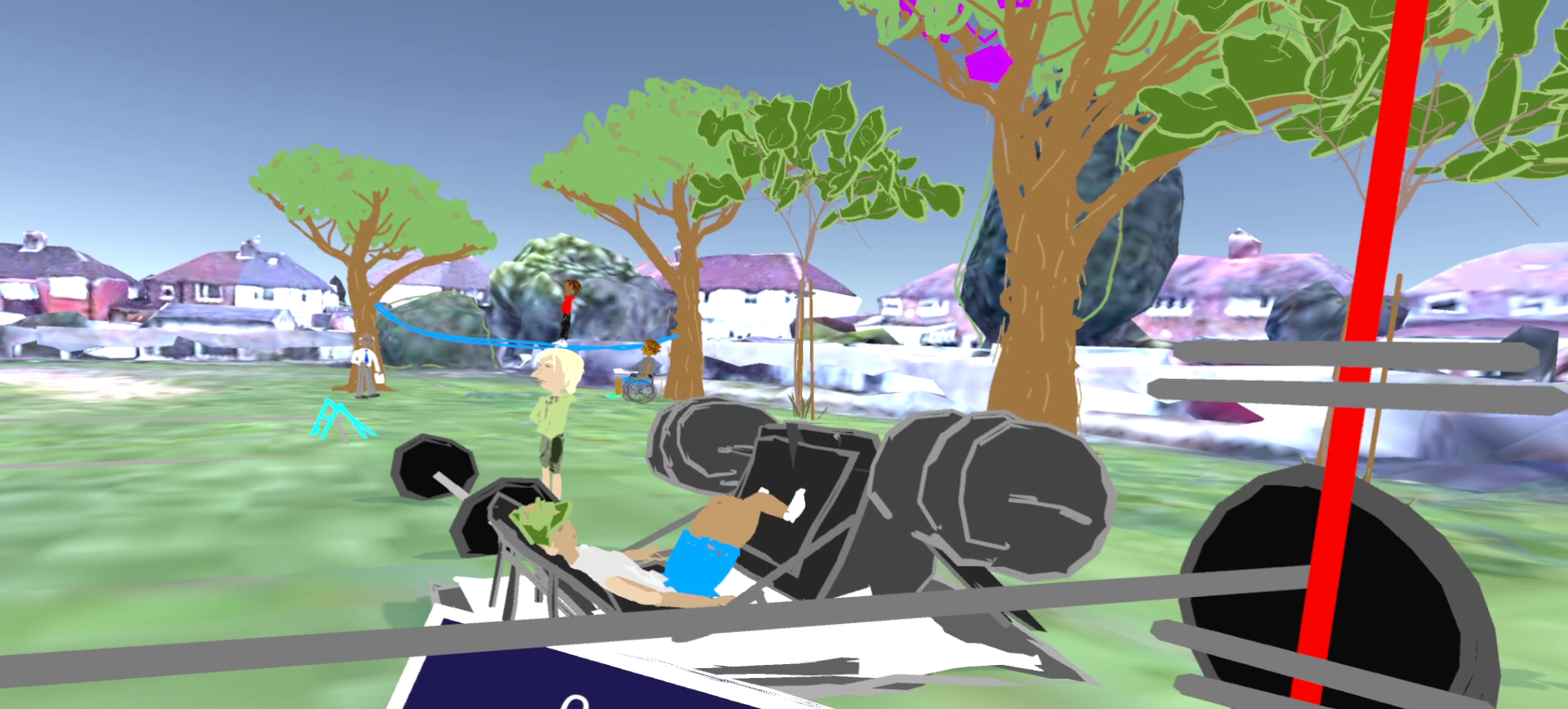
During the workshop, the group were invited to re-imagine the Kingstanding Sports and Community Centre, and as they described their ideas, an artist translated their vision into live AR sketches.
Viewed on smartphones, these appeared as a digital layer over the site, allowing participants to see their imagined future brought to life in both real time and 3D.
Imagining Kingstanding in 2046
Through guided future-thinking and an immersive soundscape, participants were taken beyond a cold February day in 2026 and into Kingstanding in 2046. The group considered the built environment, nature and biodiversity, social relationships, services, neighbourhood wellbeing, technology and inclusion to create a collective vision that included:
- Colourful community grow beds supporting a ‘green canteen’ food court.
- A living wall, softening the architecture and supporting biodiversity.
- An outdoor gym and a children’s adventure play area for physical activity and exploration.
- An underground community swimming pool supporting health and wellbeing.
- An additional storey to create more space for activities and face-to-face human connection.
The group also considered the role of technology, exploring how it might be used for good. They imagined sustainable systems for heating and cooling the building, and thoughtful ways digital tools could support inclusion and wellbeing.
Central to all designs was connection – creating spaces for meeting, sharing meals, socialising and being together human-human.
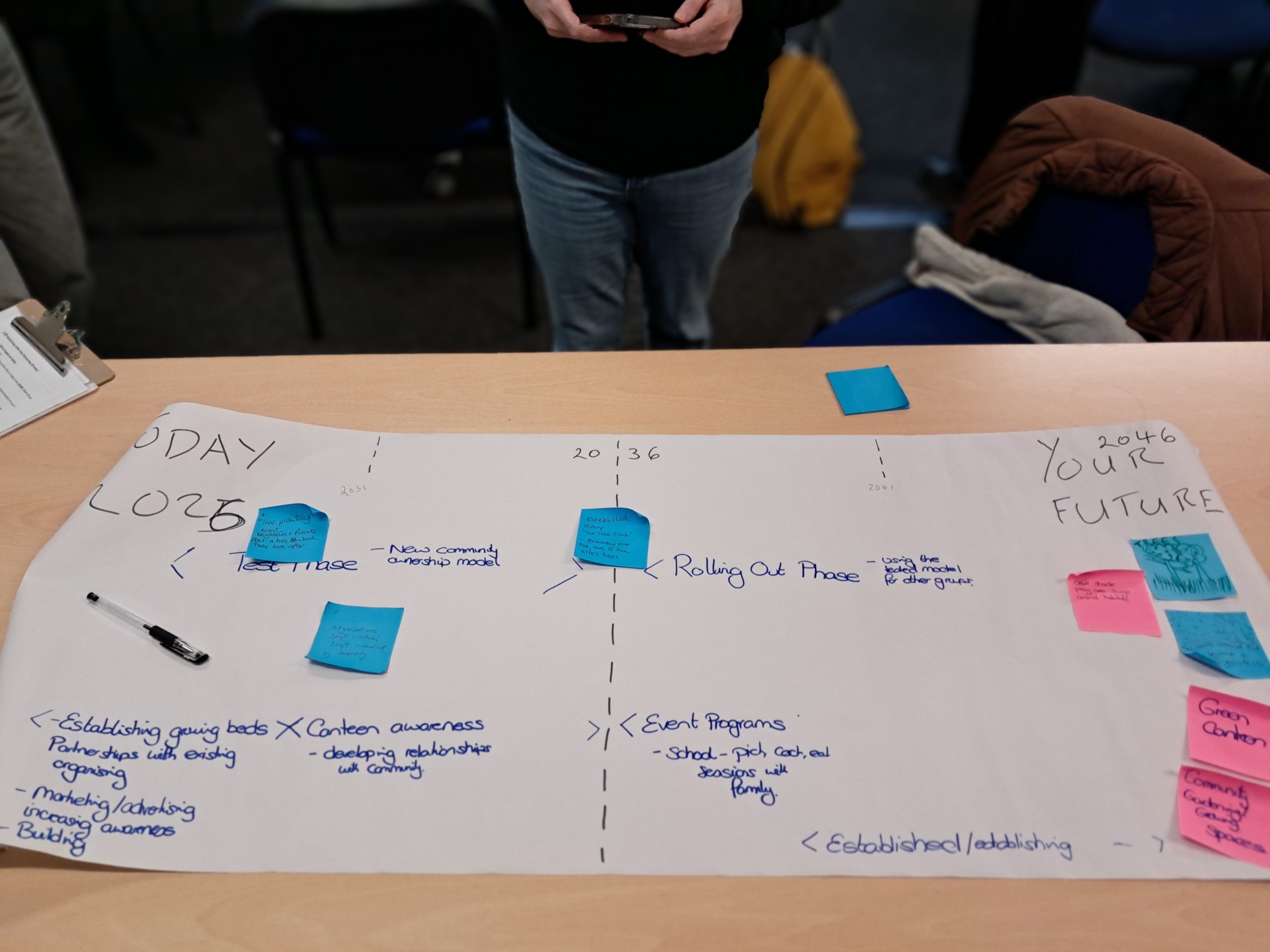
The group considered the roadmap to the future vision and the mechanisms needed to get there, like developing new ownership models for long-term care and engagement with community spaces.
Looking ahead to 2046, the group placed connection at the heart of everything. As lives and technology continue to evolve, having welcoming places to gather and support one other, to feel belonging, to look after one another felt vital – to keep our shared spaces alive for generations to come.
Why this all matters
Too often, decisions about how technology is designed, used and governed are made without the people most affected by them. Often these are about predictions or plans from corporations or politicians. But those visions don’t always reflect the real hopes, concerns and everyday experiences of people in our communities. By involving people whose voices are often neglected, CenSoF’s research explores methods for pluralising future visions and ensuring that planning is inclusive and meaningful.
For Birmingham Settlement, this project directly informs how we shape our spaces, programmes, and activities for the years ahead. It strengthens our commitment to co-designed by ensuring that service users, volunteers and local residents are not simply consulted, but actively involved in shaping the direction of the organisation.
The Futures group has encouraged people to think beyond immediate challenges and to see themselves as active contributors to the long-term future of their neighbourhood. It helps us ensure that our centre reflects the needs, hopes, and creativity of the people who use it – today and in the future.
We’re continuing to work with researchers in the Centre for Sociodigital Futures and other partners to engage with our communities and share what we’ve learned from this work – to help others see how community‑led futures conversations can influence better decisions, policies and services.
© Birmingham Settlement | Charity Registration Number: 517303