
This week (2nd-6th November) is Talk Money Week, an annual UK-wide campaign led by the Money and Pensions Service (MaPS) to encourage open conversations about our finances. This years’ theme is “It All Counts” – small, manageable, and realistic steps to make a meaningful difference. Read on for some everyday tips from our Money Advisers and to find out how we may be able to help you.
Everyday Money Saving Tips
Small changes you could make to help your money go further.
- Plan your meals: Planning meals before shopping can help reduce food waste and unnecessary spending.
- Write a shopping list: Help avoid impulse purchases and stick to what you actually need.
- Compare prices: Check different retailers and supermarkets before making purchases.
- Try supermarket own brands: Swapping a few branded products for cheaper alternatives could make a difference.
- Review subscriptions: Cancel memberships or subscriptions you no longer use.
- Check your bank statements: Look out for forgotten payments or regular expenses you could reduce.
Make Sure You’re Not Missing Out on Support
Check whether you’re receiving all the financial support you may be entitled to.
- Check whether you could be eligible for benefits or additional financial support, for example reduction schemes such as the Big Difference Scheme (reduction with current water rates for households with low income) or the Water Sure (cap on a water meter, if receiving child benefit for 3 or more dependents under 18 or on health grounds).
- Find out whether you’re entitled to discounts on your Council Tax bill, such as Council Tax Support or Single Persons Discount/Student discount and or Severely Mentally Impaired (SMI).
- Check eligibility for support with energy bills, the Warm Home Discount Scheme if receiving eligible benefit, ie: Universal Credit, Pension Credit
- Look into free school meals if you have children and in receipt of Universal Credit.
- Help with childcare costs through Universal Credit – could pay up to 85% if eligible.
- If you’re working, check whether you could access workplace benefits or support and check your Tax Code to ensure accuracy.
The below tools can help you identify what you may be eligible for.
Small Changes That Could Reduce Household Bills
Focusing on everyday habits can help to reduce household costs.
- Turn lights off when leaving a room.
- Only boil the water you need in the kettle.
- Wash clothes at lower temperatures where suitable.
- Avoid leaving appliances on standby where practical.
- Check your energy tariff and whether a better deal is available.
- Check your water provider’s affordability schemes.
- Make sure you’re on the correct Council Tax band.
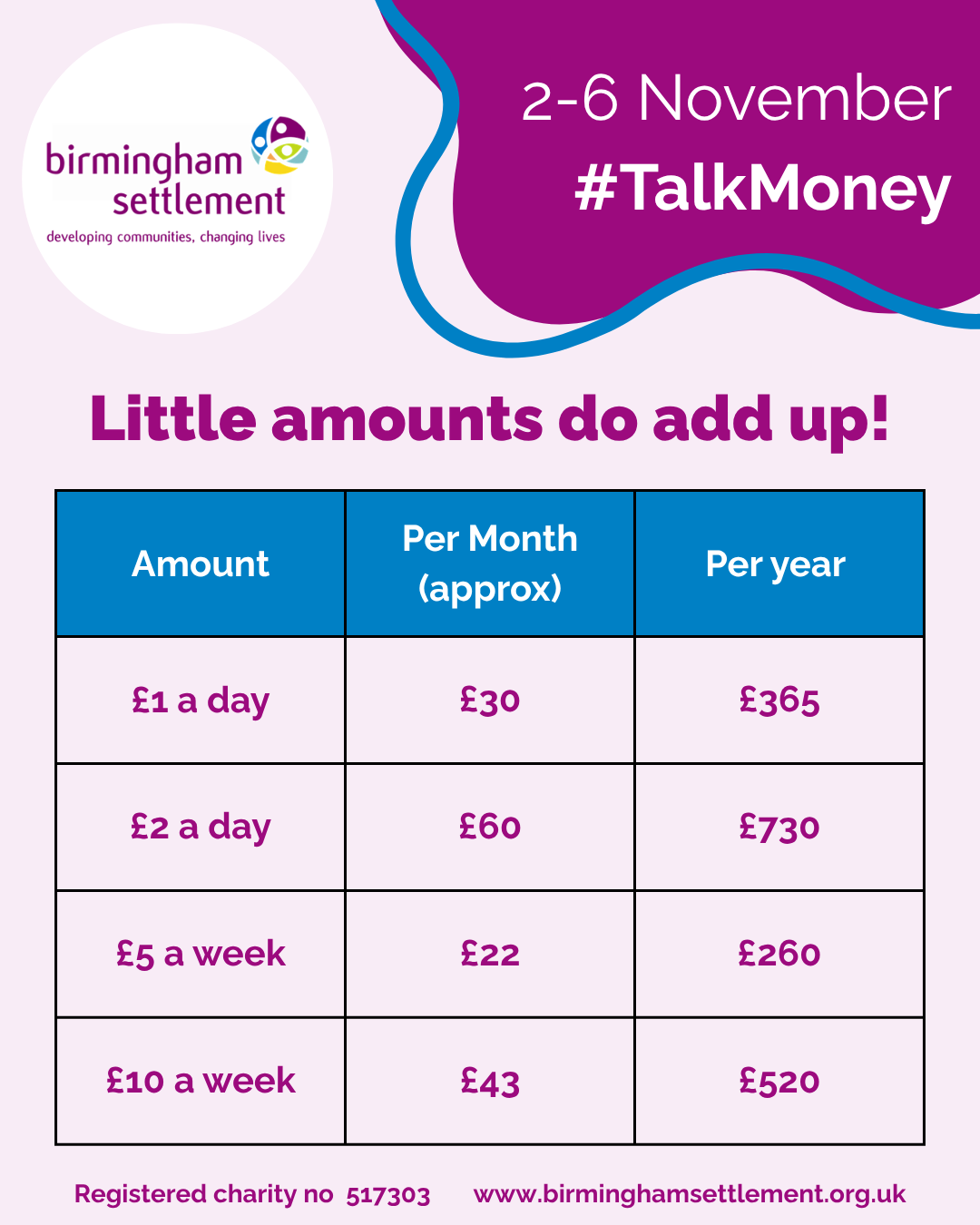
Little Amounts Add Up
Putting aside a small amount every now and then can equal big savings.
Give Your Finances a 5-Minute Health Check
Save and revisit this simple checklist.
- Check your bank balance.
- Look at your recent spending.
- Check upcoming bills and payment dates.
- Review regular subscriptions and direct debits.
- Check whether you’re paying for things you no longer need.
- Think about one small financial goal.
Don’t Overlook the Small Financial Wins
- Opening a letter you’ve been putting off.
- Checking your credit report.
- Contacting a creditor if you’re struggling with repayments.
- Speaking to someone about debt worries.
- Setting up bill reminders.
- Asking for help before financial difficulties become overwhelming.
Don’t Carry Your Worries Alone.
Financial difficulity can be managed with time, but your health is priceless. If you are struggling with debt, accessing welfare benefits, in immediate financial hardship, or need money and budgeting advice, Birmingham Settlement are here to help.
Our free and confidential AQS-accredited Money Advice service can support you in times of need through identifying priority debts, maximising your income, and talking to creditors. We also provide Hardship Grants for those in immediate financial distress.
If we find we cannot help you, we will always refer you on to someone who can.