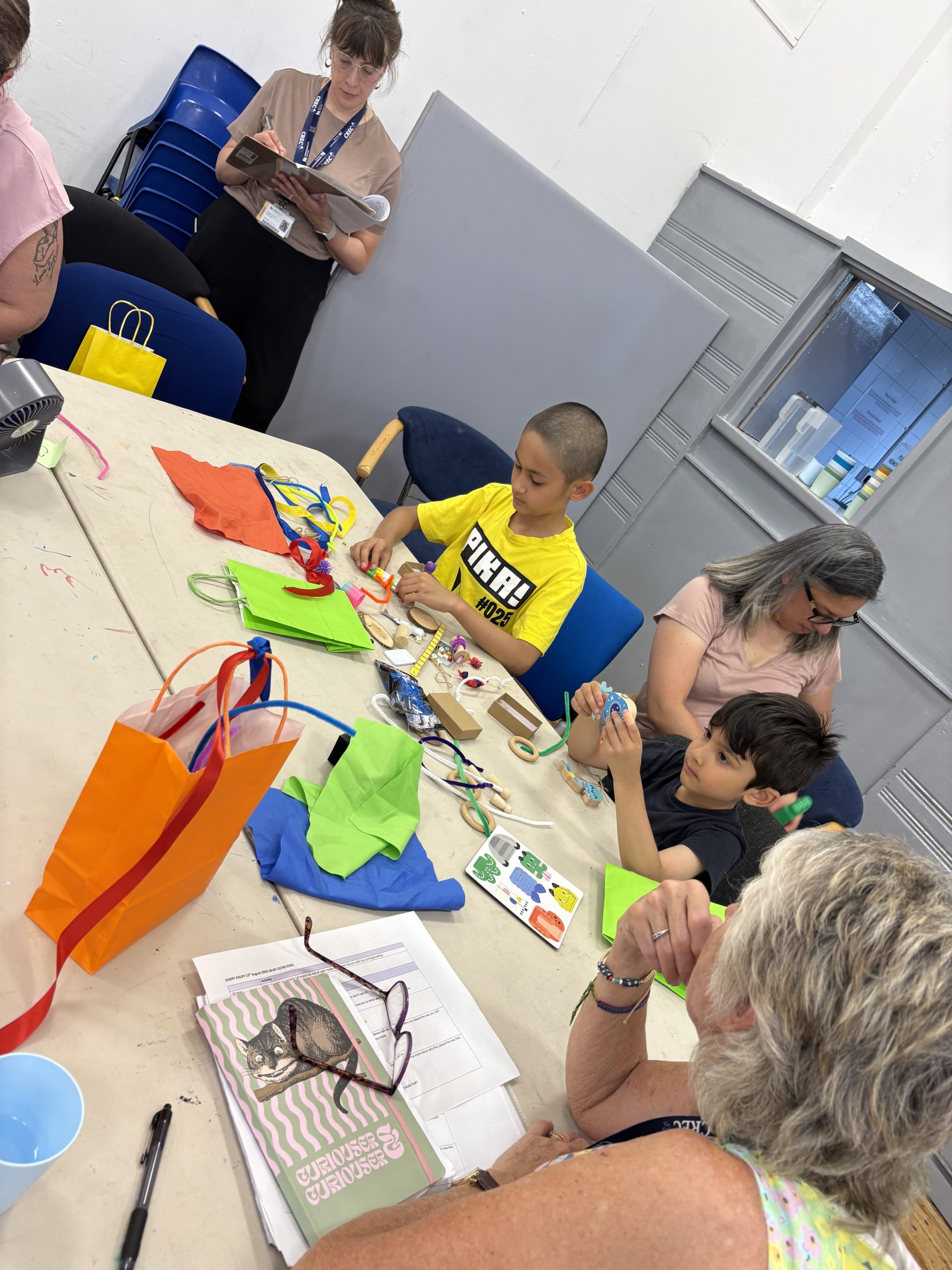
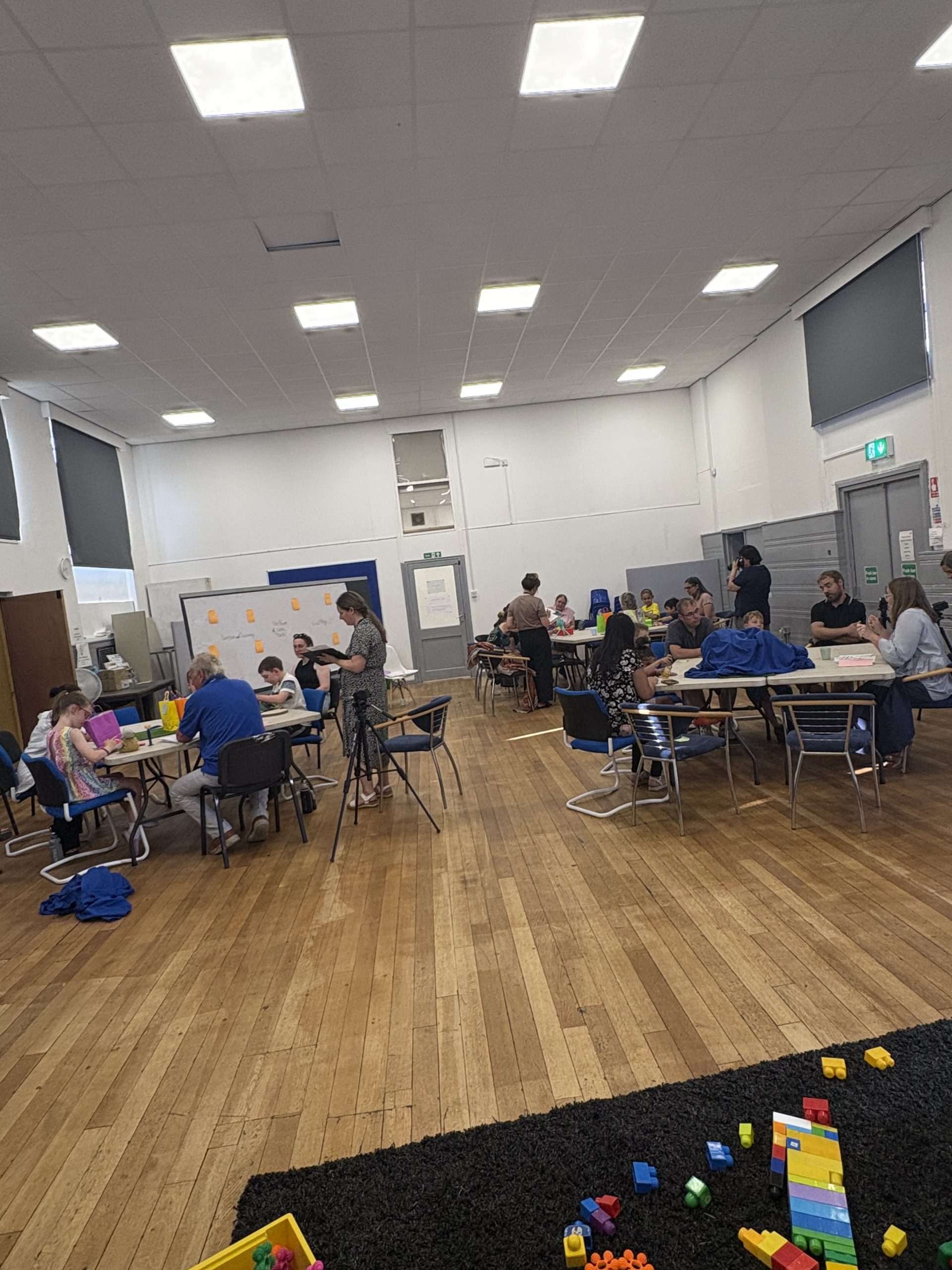
In August, 15 children and their parents/carers were invited to take part in a special play session at our Sports and Community Centre as part of a collaborative research project The Power of Loose Parts Play (POLPP), led by UCL and The Centre for Research in Early Childhood (CREC).
POLPP focused on exploring children’s interactions with loose parts materials within informal settings, aiming to understand how such play supports early learning and development including:
- Social and emotional development
- Curiosity
- Creativity, and
- Imaginative thinking.
Research methods included observations with loose parts materials and play interactions with peers and adult carers, informal conversational interviews with children about their play experiences and the graphic illustration of children’s lived experience during play through a graphic illustration produced by illustrator Juli Dosad.
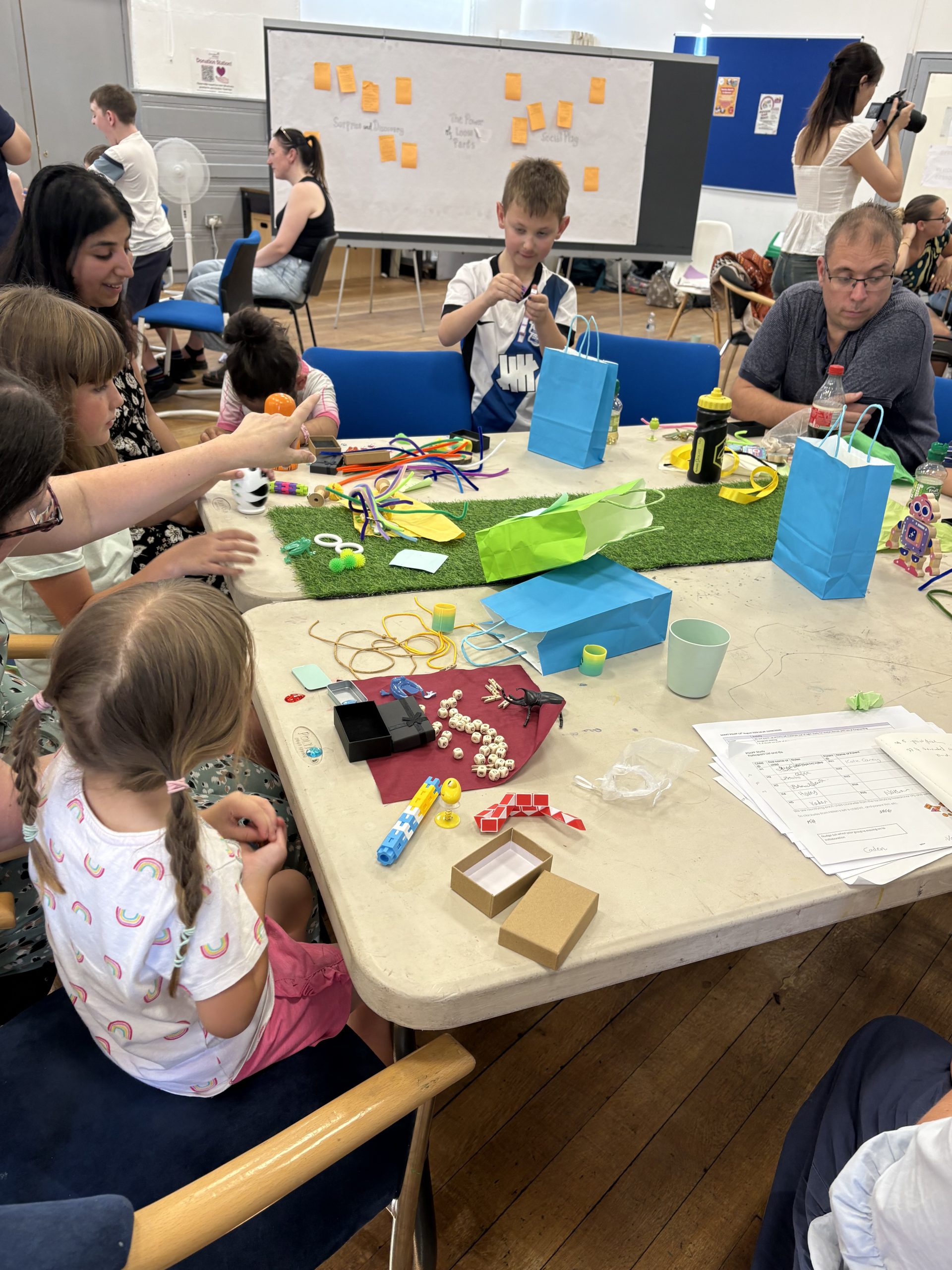
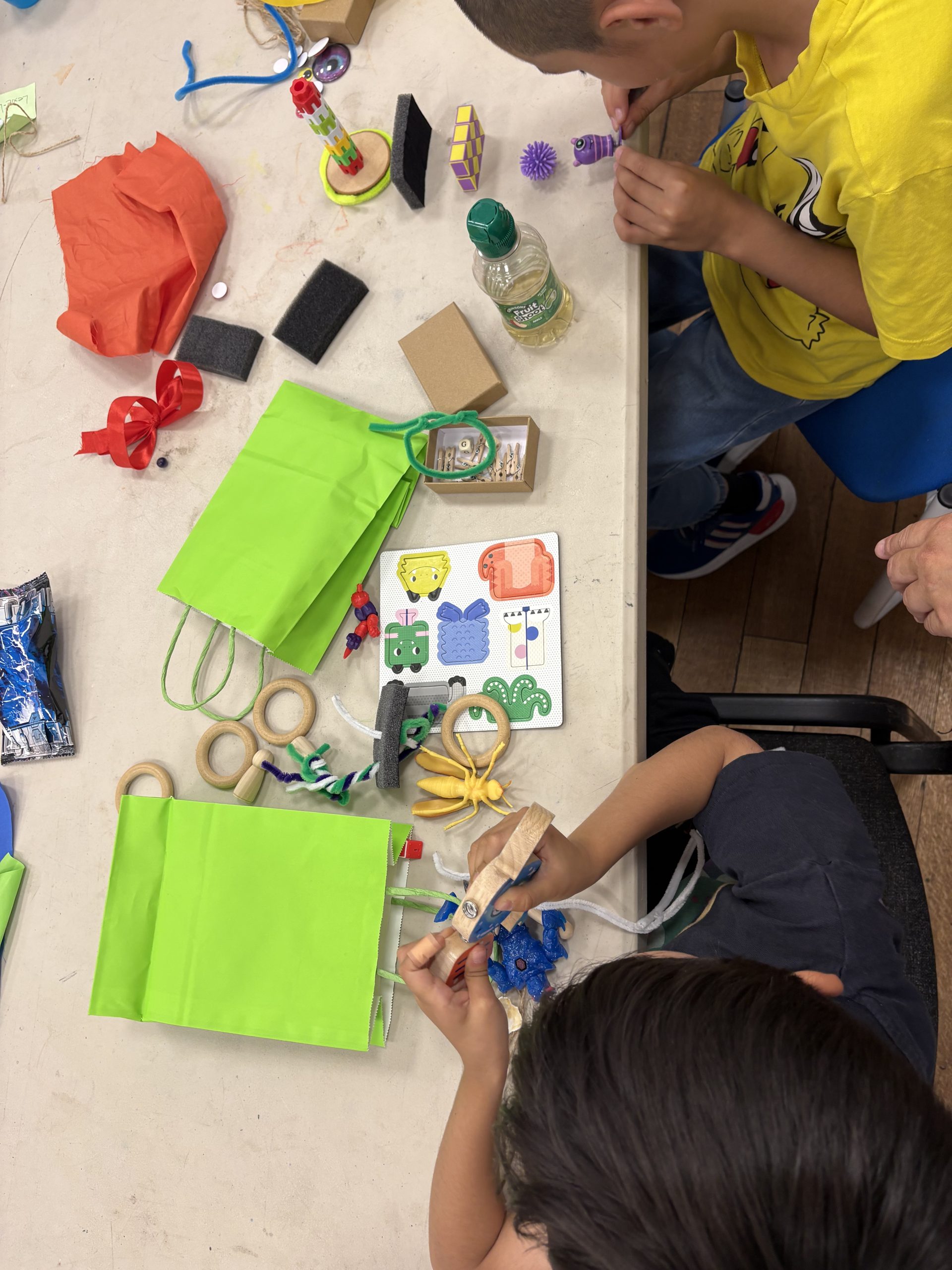
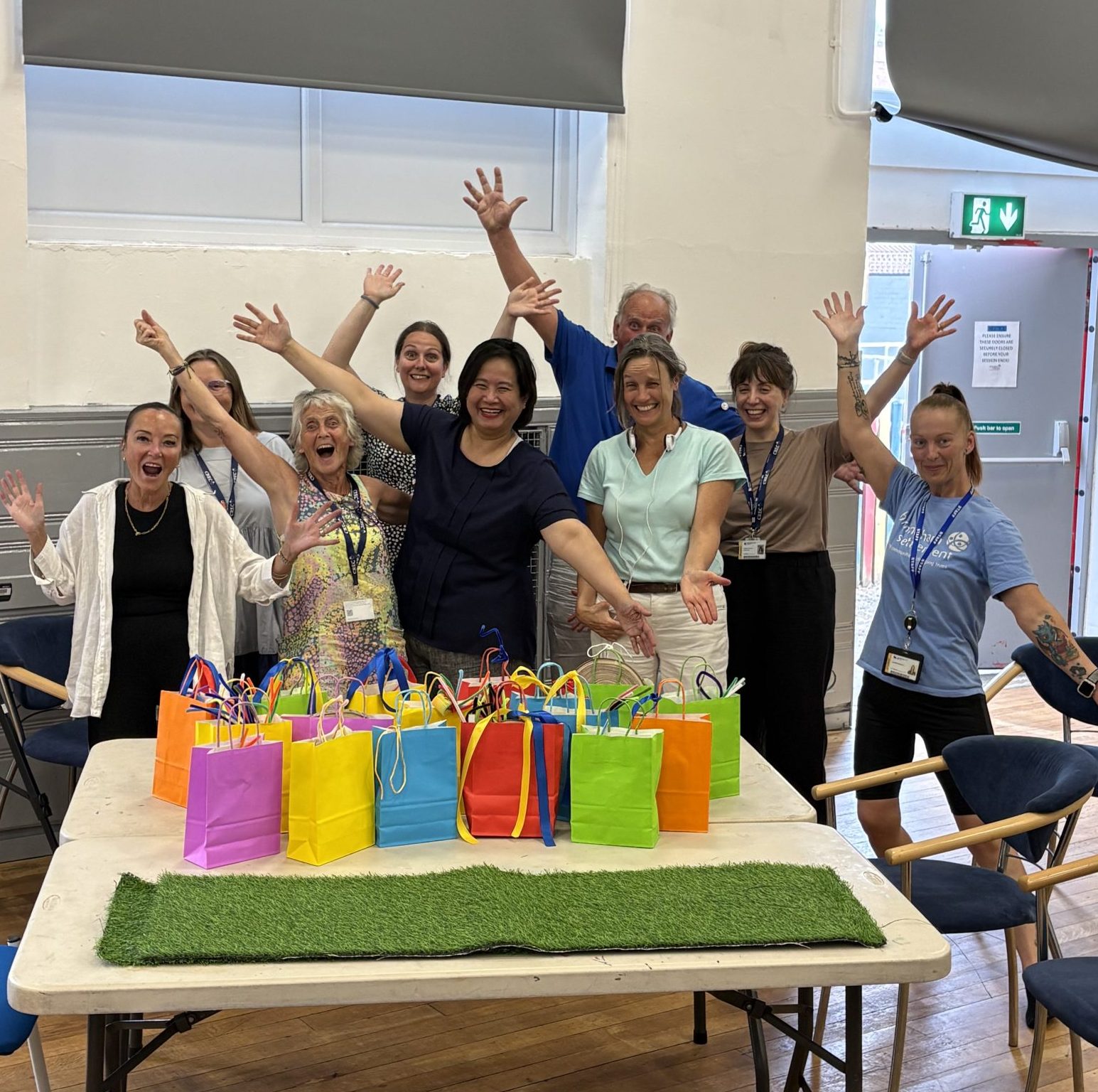
Children and families joined our Community Action Worker Lou and the research team on the hottest summer day of the year to play and discover with loose parts.
Over to Lou to tell us more!
What was your involvement in the play session?
As a Community Action Worker at Birmingham Settlement, I deliver sessions with children, so I brought together several local families I know that would be interested in participating in the research project. My role was to help explain the process and purpose of the research, and during the activities I invited families into a designated play area that I created to provide calming, reassuring, familiar surroundings. During the session itself I remained with older/younger siblings who attended but didn’t take part in the session, or children that became overwhelmed during the session. I was there to provide additional support to the CREC team.
What did you learn?
As a recent Youth and Community graduate I am a firm believer that children learn through play. I also promote this during our twice-weekly ‘Little Settlers Stay, Learn & Play’ sessions at our community centre in Kingstanding. Education can be fun and this research project showed that as children built confidence (talking/ taking turns and becoming actively involved in their own activities). The session was designed and delivered taking into account each child’s uniqueness.
What do you think children enjoyed the most?
The build-up to this activity, not knowing what to expect with tables designed for surprise activities, it was a suspense filled session with laugher from both families and the children as they uncovered their activities. The children loved their secret play sessions!
Why do you think play is important?
Children are very inquisitive and giving them something that challenges their mind while been fun is a great way to build confidence, resilience and keenness to redo over again, using play breaks many barriers when children lack confidence, understanding or even ability. Play makes things fun and challenges less challenging!
Thanks to CREC and the UCL team and all the wonderful children and families that took part. CREC and UCL will be sharing the findings back with families once analysis is complete.